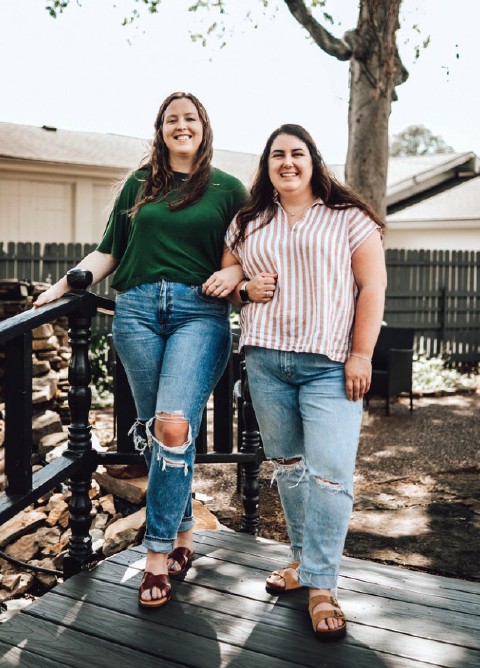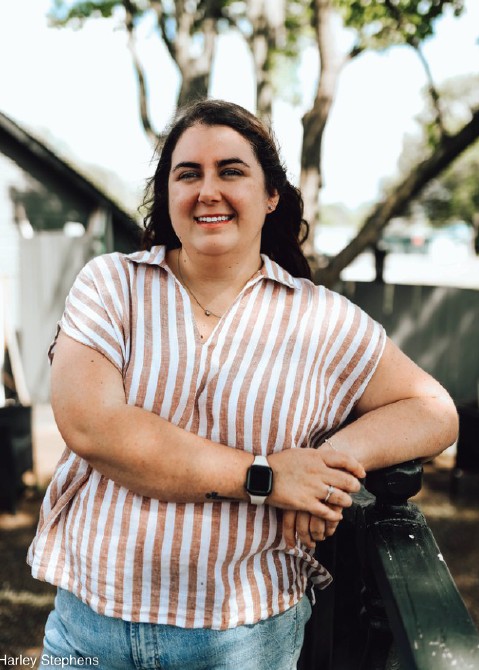
Harley
Living Donor/Donor Family
My name is Harley Stephens, and organ donation is something that has become very personal to me.
When I think about what it means to be a donor, I think about having the ability to give someone something they desperately need: more time.
We usually think of the people saving lives as the doctors and nurses in the operating room. They’re the ones running the tests, performing the surgeries, and making the medical decisions. But donors have a role in that process too. We may not be the ones holding the scalpel, but we can still be the reason someone gets another chance at life.
I know that because I’ve experienced it from both sides.
I am a living donor, but I am also the daughter of an organ donor.
My dad passed away in February of 2018. Losing him was incredibly difficult for my family, and there was nothing that could make that loss easy.
Not long after he passed, our family received a donor letter.
It was a letter explaining that because of my dad’s decision to become an organ donor, lives had been changed and saved.
That letter meant more to us than I think I can really explain.
At a time when we were dealing with so much sadness, it gave us something positive to hold onto. It reminded us that even though we had lost my dad, something good had come from his decision to give.
He had given other people a second chance.
He had given them more time with their families. More memories. More birthdays. More holidays. More everyday moments that we often don’t think twice about.
And knowing that helped.
It didn’t take away the pain of losing him, but it gave us comfort. It gave us another way to think about his legacy and the impact he had on people he would probably never even meet.
Then, in November of 2025, I found myself experiencing something completely different.
This time, I was the donor.
The person I was hoping to help was Hunter, the 12-year-old brother of a childhood friend. Hunter needed his second kidney transplant.
Before I ever received my living donor letter, there were about six months of testing, appointments, evaluations, and waiting.
There was a lot that had to happen before anyone could determine whether I was actually eligible to donate. The committee ultimately had to review everything and decide whether I could move forward.
It was a long process, and there were a lot of moments where I didn’t know what the outcome would be.
But for me, it kept coming back to Hunter.
He was 12 years old and needed a kidney.
At that point, it wasn’t really about what I might have to go through. It was about what this could mean for him.
It could mean giving him another chance to grow up.
It could mean more time with his family.
It could mean more birthdays, more holidays, more memories, and more of the normal experiences that a kid should get to have.
It could mean giving him the opportunity to just be a kid.
Going through that process made me think about my dad’s donor letter all over again.
When my dad became a donor, his gift came after his death. With Hunter, I had the opportunity to give while I was still here.
The circumstances were completely different, but the reason behind both was the same.
It was about giving someone more time.
I think that’s one of the things people don’t always realize about organ donation. It’s easy to think about it as a medical procedure, but it really goes far beyond that.
It’s about what happens after the procedure.
It’s about the family that gets to keep their loved one.
It’s about the child who gets another chance to grow up.
It’s about the parent who gets to watch their child reach another milestone.
It’s about the birthdays and holidays and family dinners that wouldn’t have happened without that donation.
It’s about all of those little moments that we don’t always appreciate until we realize how important they really are.
I also understand that becoming a donor can be a big decision.
Some people may hear about organ donation and think, Maybe someday.
Others might think, I’m not sure I could do that.
And that’s okay.
I don’t think anyone should feel pressured into making a decision they aren’t comfortable with.
What I do hope is that people will take the time to learn about it and have conversations with their families.
Talk about what you would want.
Talk about what your family would want.
Consider becoming a donor, whether that’s through registering as an organ donor after death or simply learning more about living donation and what it involves.
For me, becoming a donor has completely changed the way I look at organ donation.
Before my dad died, I understood what donation meant in a general sense. After we received his letter, I understood the impact it could have on other people.
And after becoming a living donor myself, I understood it in a completely different way.
I experienced the testing, the appointments, the uncertainty, and the waiting. I experienced what it feels like to know that something you’re choosing to do could potentially change another person’s entire future.
And I also realized that you don’t have to be a doctor or a nurse to have an impact.
Sometimes, the most important thing you can do is simply be willing to give.
Losing my dad will always be one of the hardest things I’ve ever gone through. I would give anything to have more time with him.
But I find comfort in knowing that, in his own way, he helped give other families the time that we didn’t get to have with him.
And now, having had the opportunity to be a living donor, I understand that gift from another perspective.
My dad gave people more time.
I had the opportunity to try to do the same for Hunter.
And that’s what organ donation means to me.
It’s not really about the surgery.
It’s not about the paperwork.
It’s not even about being called a donor.
It’s about people.
It’s about giving someone a future they may not otherwise have.
It’s about giving families more time together.
And sometimes, it’s about finding something good in the middle of something incredibly difficult.
I know my dad’s decision made a difference.
And I hope my decision can make a difference too.
If there is one thing I hope people take away from my story, it’s simply this: learn about organ donation, talk about it with the people you love, and consider becoming a donor.
Because one decision can mean more time.
And sometimes, more time is the greatest gift you can give someone.